

 +91 8080803848


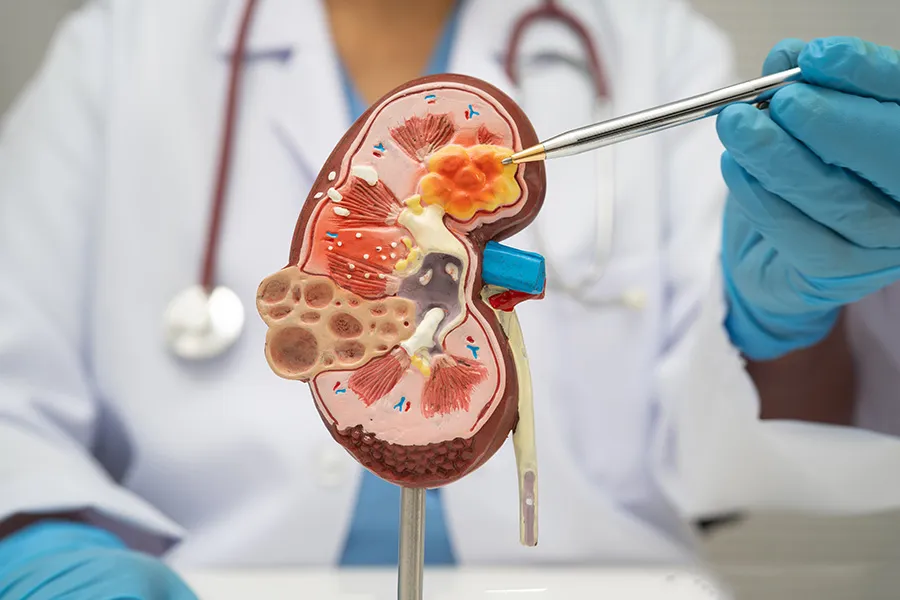
The incidence of kidney stones in India has seen a steady rise, driven by changing dietary patterns, sedentary lifestyles, and shifting climate conditions. In 2026, medical advancements have transformed how we diagnose and treat this incredibly painful condition. Gone are the days when open surgery was the default; today, advanced minimally invasive procedures dominate urological care, offering faster recovery times, higher success rates, and minimal discomfort.
If you are experiencing sudden, severe back pain or navigating the confusing landscape of urological procedures, understanding your options is the first step toward relief. Finding an advanced medical centre like Sushrut Hospital, Chembur, is crucial, but being an informed patient empowers you to make the right healthcare decisions.
This guide covers everything you need to know in 2026, from identifying early kidney stone symptoms to exploring advanced kidney stone treatment options like RIRS surgery and laparoscopic pyeloplasty.
What Are Kidney Stones?
Kidney stones (medically known as urolithiasis or nephrolithiasis) are hard, solid deposits composed of minerals and salts that crystallise inside the kidneys. While they typically originate in the kidneys, these hardened mineral deposits can manifest at any point throughout the entire urinary system, including the ureters, bladder, and urethra.
The crystallisation process begins when your urine lacks sufficient fluid to dilute the waste, creating a highly concentrated environment. In this concentrated environment, excess minerals lack the fluid volume necessary to remain dissolved, causing them to stick together and form a crystalline matrix. While passing a stone is notoriously painful, prompt medical intervention ensures that they cause no permanent damage to your renal system.
Did You Know?
India’s shifting climate and rising urban temperatures directly impact urological health. Specialists at Sushrut Hospital, Chembur, frequently observe a 15% to 20% surge in kidney stone cases during the peak summer months. When you sweat excessively without replenishing fluids, your urine volume drops, causing stone-forming minerals like calcium and oxalate to crystallise rapidly. Drinking 2.5 to 3 litres of water daily is your strongest defence against stone formation.
The Four Primary Types of Kidney Stones
Not all kidney stones are identical. They vary drastically in size, from microscopic grains of sand to massive, golf-ball-sized deposits, and differ in their chemical composition. Knowing the type of stone you have dictates your long-term prevention strategy.
|
Stone Type |
Prevalence |
Primary Cause / Composition |
Dietary & Lifestyle Triggers |
|
Calcium Stones |
75% - 80% |
Calcium oxalate or calcium phosphate. |
High intake of oxalate-rich foods (spinach, chocolate, nuts), low fluid intake, and high sodium diets. |
|
Uric Acid Stones |
10% - 15% |
An excessive concentration of uric acid is excreted into the urinary tract. |
High-purine diets rich in animal proteins (red meat, shellfish), gout, or rapid weight loss. |
|
Struvite Stones |
5% - 10% |
Formed by magnesium ammonium phosphate. |
Chronic urinary tract infections (UTIs). These grow quickly and become extremely large (staghorn calculi). |
|
Cystine Stones |
1% - 2% |
Excess cystine (an amino acid) leaking into urine. |
A rare hereditary genetic disorder known as cystinuria. |
Did You Know?
A kidney stone can sit quietly in your kidney for years without causing a single symptom. Pain, often described as worse than childbirth, only occurs when the stone drops into the narrow ureter (the tube connecting the kidney to the bladder) and blocks the flow of urine. This obstruction causes the kidney to swell, triggering the intense spasms known as renal colic.
Common Kidney Stone Symptoms
Kidney stones are often asymptomatic while they remain stationary in the kidney. The agonising symptoms typically begin when a stone dislodges and begins to travel down the narrow ureter, causing a blockage and resulting in pressure buildup in the kidney.
If you experience the following kidney stone symptoms, seek immediate medical evaluation:
- Renal Colic (Severe Pain): An intense, sharp, and cramping pain originating in the lower back or side, just below the ribs. This pain often radiates down to the lower abdomen and groin area.
- Fluctuating Pain Waves: The pain rarely remains constant; it comes in intense waves that can last anywhere from 20 to 60 minutes as the ureter contracts to push the stone.
- Hematuria (Blood in Urine): The abrasive edges of the stone scraping against the urinary tract can turn urine pink, red, or dark brown.
- Urinary Urgency and Frequency: A constant, desperate need to urinate, often accompanied by a burning sensation (dysuria) during the process.
- Nausea and Vomiting: The intense pain pathways are closely shared with the gastrointestinal tract, frequently triggering severe nausea.
- Fever and Chills: If a fever accompanies your pain, it is a clinical red flag indicating a severe infection or a fully blocked kidney, requiring emergency medical intervention.
How Kidney Stone Treatment Works: Step-by-Step
Understanding the clinical workflow helps demystify the hospital experience. Here is the standard protocol you can expect when visiting a top-tier urology department.
|
Step |
Action |
Who Does It |
Timeline |
|
1. Initial Consultation |
Symptom assessment, physical exam, and pain management (analgesics). |
Urologist / ER Doctor |
Day 1 |
|
2. Diagnostic Imaging |
Non-contrast CT scan (Gold Standard) or Ultrasound to pinpoint stone size and location. |
Radiologist |
Day 1 |
|
3. Lab Work |
Blood tests (kidney function, calcium, uric acid) and Urinalysis (infection, crystals). |
Pathologist |
Day 1 - 2 |
|
4. Treatment Planning |
Deciding between conservative management (fluid therapy) or surgical intervention based on stone size. |
Urologist & Patient |
Day 2 |
|
5. The Procedure |
Performing ESWL, RIRS, PCNL, or Laparoscopy. |
Surgical Team |
Scheduled |
|
6. Stone Analysis |
Sending retrieved stone fragments to the lab for chemical composition analysis. |
Laboratory |
Post-Op |
|
7. Metabolic Evaluation |
24-hour urine collection to identify systemic causes and build a prevention diet. |
Urologist or Nephrologist |
4 Weeks Post-Op |
Modern Kidney Stone Treatment Options
The treatment landscape relies entirely on data points: the size of the stone, its exact anatomical location, its density (Hounsfield units on a CT scan), and the patient's medical history. For small stones (under 5mm), conservative management is often successful. For larger stones, modern surgical intervention is required.
Did You Know?
The era of large surgical incisions for kidney stones is over. In 2026, over 90% of kidney stones requiring surgical intervention can be treated using minimally invasive or entirely incision-less techniques like RIRS (Retrograde Intrarenal Surgery). Using high-definition flexible cameras and precise Holmium/Thulium lasers, surgeons can now turn a 15mm stone into fine dust, allowing most patients to go home within 24 hours.
1. Retrograde Intrarenal Surgery (RIRS Surgery)
RIRS surgery has become the gold standard for managing stones located deep within the kidney, particularly those between 10mm and 20mm.
- How it works: This is a zero-incision procedure. The surgeon passes a highly flexible, ultra-thin fibre-optic endoscope through the urethra, into the bladder, up the ureter, and directly into the kidney's collecting system. Once the stone is located, a high-powered Holmium or Thulium laser pulverises the stone into fine dust, which is naturally flushed out with urine.
2. Percutaneous Nephrolithotomy (PCNL)
When a stone is exceptionally large (over 20mm), unusually dense, or structurally complex (like a staghorn struvite stone), PCNL is the procedure of choice.
- How it works: The surgeon creates a tiny incision in the patient's back. A hollow tube is placed directly into the kidney under X-ray guidance. Specialised instruments are passed through this tract to break up the stone and vacuum out the fragments. Mini-PCNL techniques use even smaller tracts, accelerating recovery.
3. Extracorporeal Shock Wave Lithotripsy (ESWL)
ESWL is a non-invasive outpatient procedure for smaller, softer stones located in highly accessible areas of the kidney.
- How it works: Sound waves are generated outside the body and focused perfectly onto the stone via ultrasound or X-ray targeting. The acoustic shock waves shatter the stone into passable fragments.
4. Bladder Stone Treatment (Cystolitholapaxy)
Stones don't just form in the kidneys; they can develop in the bladder, often due to underlying issues like an enlarged prostate trapping urine.
- How it works: Bladder stone treatment is typically managed via cystoscopy. A camera is inserted through the urethra into the bladder, and lasers or mechanical crushers are used to destroy the stone.
5. Laparoscopic Pyeloplasty
Sometimes, recurrent stones are a symptom of a structural defect. Ureteropelvic junction (UPJ) obstruction is a condition where the connection between the kidney and the ureter is narrowed, causing urine to pool and stones to form continuously.
- How it works: Laparoscopic pyeloplasty is a reconstructive, minimally invasive surgery. Using small keyhole incisions and a camera, the surgeon removes the narrowed, scarred section of the ureter and reconnects the healthy tissue to the kidney.
Comparing Surgical Treatment Options
|
Feature |
RIRS Surgery |
Mini-PCNL |
ESWL |
|
Incision Required? |
None (Natural Orifice) |
Yes (Tiny keyhole in back) |
None (External shockwaves) |
|
Ideal Stone Size |
8mm to 20mm |
Greater than 20mm |
5mm to 10mm (soft stones) |
|
Stone Clearance Rate |
90% - 95% |
95% - 98% |
60% - 75% |
|
Hospital Stay |
Day care / 24 hours |
2 to 3 days |
Outpatient (Few hours) |
|
Recovery Time |
2 to 4 days |
1 to 2 weeks |
1 to 2 days |
|
Anesthesia |
General or Spinal |
General |
Mild Sedation / Analgesics |
Preventative Strategies: Data-Backed Approaches
Statistically, without lifestyle modifications, a patient who forms one calcium stone has a 50% chance of forming another within five to seven years. To lower your risk profile:
- Hyper-Hydration: Aim for a daily urine output of at least 2 to 2.5 litres.
- Moderate Calcium, Lower Sodium: You should consume normal amounts of dietary calcium but strictly limit sodium (salt), which forces the kidneys to excrete excess calcium.
- Monitor Animal Protein: High intake of meat, poultry, and fish raises uric acid levels and reduces urinary citrate.
Also Read: More Expert Insights from Sushrut Hospital
- Cardiology: Consulting the Best Cardiologist in Mumbai: Your Guide to Comprehensive Heart Diagnostics
- Cardiology: Heart Health Guide: Expert Care for Every Beat of Life
- Neurology: Recognising the First Signs of a Stroke: Why Every Minute Counts
- Gastroenterology: Understanding Fatty Liver Disease: Causes, Symptoms, Diagnosis, Risks, and Treatment Options
- Holistic Health: The Gut-Heart Connection: Nurturing Digestive Health for Cardiovascular Wellness
- Urology: Kidney Transplant Care: Pre-Transplant Preparation & Post-Transplant Healthy Living
Frequently Asked Questions
Yes. While dehydration is the most common trigger, stones can still form in well-hydrated individuals due to genetic predispositions, structural abnormalities, metabolic disorders, or diets excessively high in sodium and oxalates.
If left untreated, a stone that completely blocks the flow of urine can lead to kidney swelling (hydronephrosis), severe infections, and eventually irreversible loss of kidney function. Early diagnosis and kidney stone treatment prevent permanent damage.
No. Stones that are small and remain stationary within the kidney's calyces often cause no symptoms at all. Pain usually occurs only when the stone shifts into the narrow ureter and causes an obstruction.
RIRS surgery is highly preferred because it is entirely incision-less. By utilising natural body orifices and flexible fibre-optic technology, surgeons can reach any part of the kidney, resulting in zero external scarring and a much faster return to normal life.
Look for a specialist with extensive fellowship training in endourology and a high volume of successfully performed RIRS and PCNL surgeries. Consulting a specialised department, such as the one at Sushrut Hospital, Chembur, ensures you have access to the best urologist in Mumbai equipped with the latest generation of Thulium/Holmium lasers.
 Book an Appointment
 Call: 022-69585500